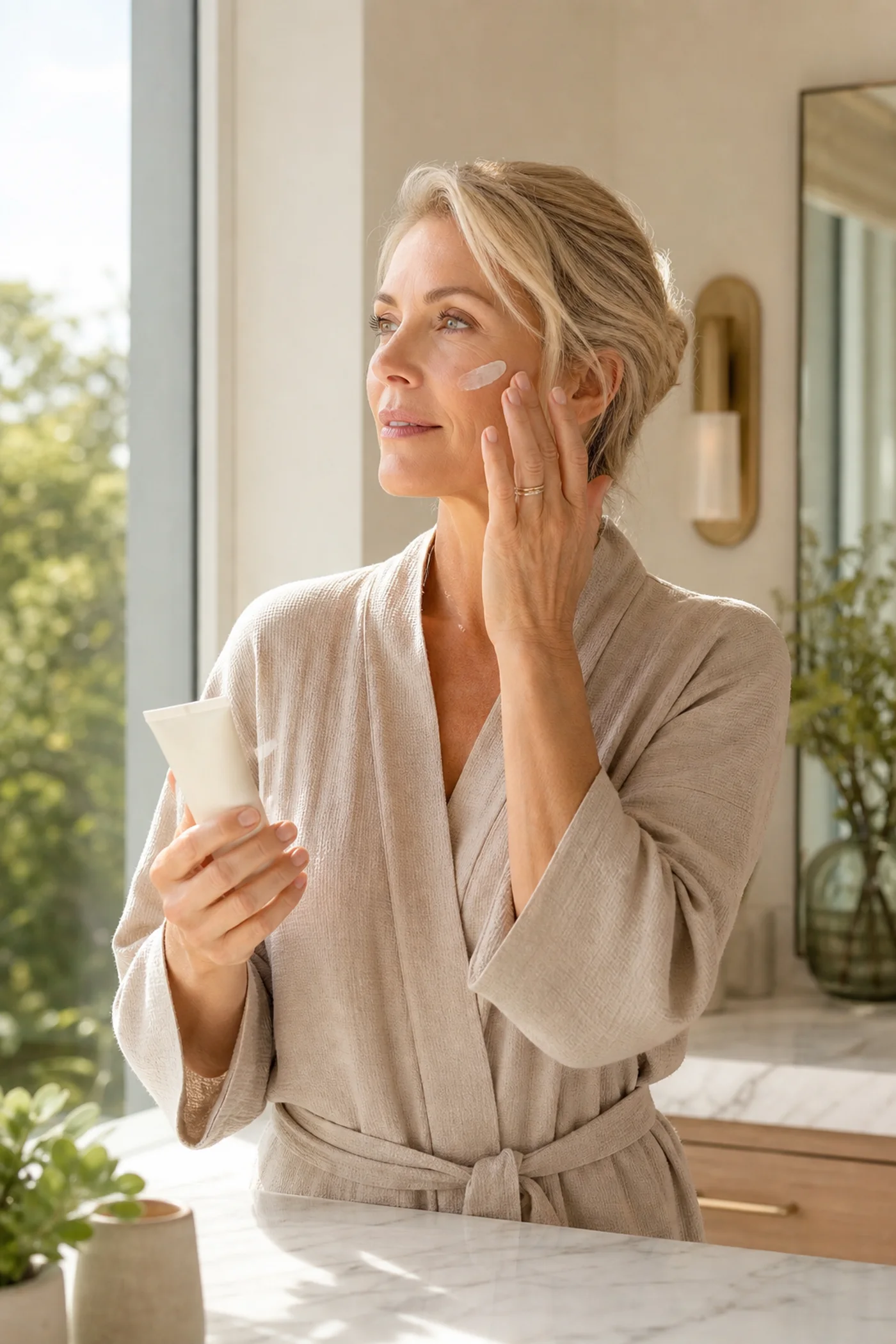
Choosing sunscreen after 40 is not about finding one perfect label. It is about choosing a formula you will actually use generously and consistently. Mature skin can feel drier, makeup may sit differently, and the eye area can be more reactive, so texture matters as much as the type of filter.
Both mineral and chemical sunscreens can be useful. The best choice is the one that protects well, feels comfortable on your skin, and fits your daily routine without irritation or heavy pilling.
Mineral sunscreen: what it means
Mineral sunscreens usually use zinc oxide and/or titanium dioxide as the active filters. They sit on the skin surface and help protect by reflecting and scattering UV light. Many sensitive-skin routines start here because the ingredient list can be simpler and easier to understand.
- Best for: sensitive-feeling skin, fragrance-free routines, visible sun-care habits, and anyone who wants a simple label.
- Possible downside: some formulas can feel thicker, leave a white cast, or pill if layered over too many serums.
- Helpful tip: tinted mineral sunscreen can look softer on many skin tones and often sits better under makeup than a stark white formula.
Chemical sunscreen: what it means
Chemical sunscreens use organic UV filters that absorb UV rays. Many modern formulas feel lighter, more transparent, and easier to wear under makeup. This can be helpful if heavy creams make you skip SPF or use too little.
- Best for: people who dislike white cast, want a lighter finish, or prefer an elegant daily texture.
- Possible downside: some formulas can sting around the eyes or feel drying if they contain fragrance or a high amount of alcohol.
- Helpful tip: if your eyes water easily, test the formula around one eye area on a low-pressure day before using it for a long outdoor day.
How to choose for mature skin
After 40, sunscreen often needs to do more than protect. It should also feel comfortable on drier skin, avoid settling into texture, and work with moisturizer or makeup. Use these simple decision points:
- If your skin is dry: choose a moisturizing SPF or layer sunscreen over a gentle moisturizer.
- If your skin is reactive: start with fragrance-free mineral sunscreen and avoid strong fragrance or essential-oil-heavy formulas.
- If makeup matters: test pilling on one cheek before a full day. Fewer layers underneath often helps.
- If white cast is the problem: try tinted mineral sunscreen, a hybrid formula, or a lightweight chemical sunscreen.
- If you spend time outdoors: prioritize water resistance, enough product, shade, a hat, and reapplication.
Application that makes the biggest difference
The best sunscreen still underperforms when the layer is too thin. Apply enough for the face, neck, ears, and the upper chest if it is exposed. Let moisturizer settle first, then apply sunscreen as the final skincare step before makeup.
- Apply a generous layer in the morning.
- Bring it down the neck and around the ears.
- Wait a few minutes before makeup if pilling is an issue.
- Reapply when outdoors, sweating, swimming, or wiping your face.
- Use a hat and shade as extra support, not as a replacement for SPF.
Common mistakes
- Using too little because the formula feels heavy.
- Skipping the neck, ears, and chest.
- Relying on SPF makeup as the only protection.
- Switching formulas every few days before you know what caused irritation.
- Assuming “natural” automatically means gentler — natural fragrance can still bother sensitive skin.
Quick checklist
- Choose a texture you will use daily.
- Look for fragrance-free if your skin is easily irritated.
- Use enough product, not just a tiny dot.
- Reapply during outdoor exposure.
- Patch test if your skin or eyes react easily.
Ingredients mentioned in this guide
These are product-type search links, not guaranteed direct product endorsements. Availability changes, and some links may use iHerb code FVQ4930.
Use sunscreen as directed on the label. If you have persistent irritation, photosensitivity, a history of skin cancer, or medication-related sun sensitivity, ask a qualified professional for personal guidance.
Related Reading
Build a softer daily ritual
If sunscreen has always felt heavy or irritating, keep the routine simple: gentle cleanse, light moisturizer if needed, sunscreen, and a practical reapplication plan for outdoor time. A product you use consistently is more valuable than a “perfect” one that stays in the drawer.
Educational beauty content only. Sunscreen needs vary by skin tone, UV exposure, health history, medications, and sensitivity. This article does not replace medical advice. Ask a qualified professional for persistent irritation, sun sensitivity, or personal skin-cancer prevention guidance.